
Understanding End Mill Cutters in Malaysia
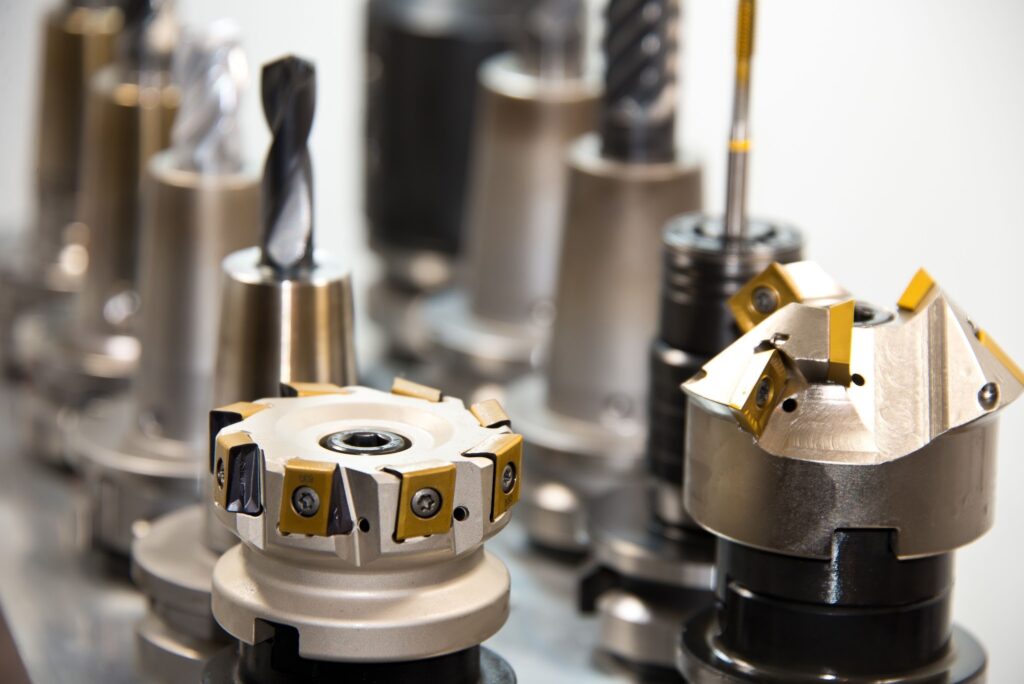
End mills are essential cutting tools used in milling machines and CNC machining centres to remove material and create accurately shaped components. Unlike conventional drill bits, which are primarily designed for axial cutting, end mills can typically cut using both their end and peripheral edges, depending on their geometry.
Selecting suitable end mill cutters in Malaysia requires manufacturers to consider the workpiece material, machining operation, tool geometry and machine capabilities. The right combination can influence surface finish, dimensional accuracy, chip evacuation and overall machining performance.
Common Types of End Mill Cutters
End mills are available in numerous geometries for different machining tasks. Square end mills have a relatively flat cutting end and are commonly used for operations such as slotting, profiling and producing shoulders.
Ball nose end mills feature a rounded tip. Their geometry makes them useful for machining curved surfaces, moulds, dies and complex three-dimensional contours. Corner-radius end mills provide another option by incorporating a radius between the tool’s end and side cutting edges.
Roughing end mills are designed to remove larger quantities of material efficiently, while finishing tools focus more heavily on producing the required dimensions and surface quality.
Tool selection should therefore begin with the intended machining operation rather than simply choosing an appropriate diameter.
Why Flute Count Matters
Flute geometry is an important technical consideration when selecting end mill cutters in Malaysia. Flutes create the cutting edges while providing space for chips to leave the cutting zone.
Tools with fewer flutes generally provide larger chip spaces, which can be useful when machining materials that generate larger or longer chips. Higher flute counts provide more cutting edges and may support productive machining under suitable conditions, but they leave less space between edges for chip evacuation.
The appropriate flute count therefore depends on workpiece material, cutting parameters and operation type. Poor chip evacuation can lead to recutting, increased heat and deterioration of the machined surface.
Tool Materials and Coatings
Solid carbide is commonly used for modern end mills because it offers high hardness, wear resistance and rigidity. High-speed steel is another established cutting-tool material and may remain suitable for certain machines and applications.
Manufacturers can also use a tool coating service in Malaysia to modify the surface properties of compatible tooling. Coatings such as titanium nitride (TiN) and titanium aluminium nitride (TiAlN) can provide additional wear or thermal resistance under appropriate machining conditions.
Coating selection should be matched to the workpiece, cutting speed, coolant strategy and operating temperature. A coating that performs well when machining one material may not be ideal for another.
Cutting Speed, Feed and Tool Life
Machining parameters have a direct relationship with cutter performance. Cutting speed describes the relative speed between the cutting edge and workpiece, while feed determines how quickly the tool advances through the material.
For rotating tools, spindle speed is influenced by cutter diameter and the desired cutting speed. Feed rate is commonly determined using spindle speed, number of cutting edges and the intended feed per tooth.
Excessive parameters can accelerate tool wear or cause tool failure. Parameters that are unnecessarily conservative, meanwhile, can reduce productivity and may not always produce the best cutting conditions.
Selecting End Mills for Production
When sourcing end mill cutters in Malaysia, manufacturers should consider workpiece material, tool diameter, flute count, cutting length, coating and required surface finish. Machine rigidity, spindle capability, tool holding and coolant delivery also affect performance.
Tool overhang should be kept appropriate for the operation because excessive extension can reduce rigidity and increase vibration.
Rather than treating the cutter as an isolated component, manufacturers should consider the complete machining system. Matching tool geometry, material and cutting parameters to the machine and workpiece can support more stable and repeatable milling operations.
